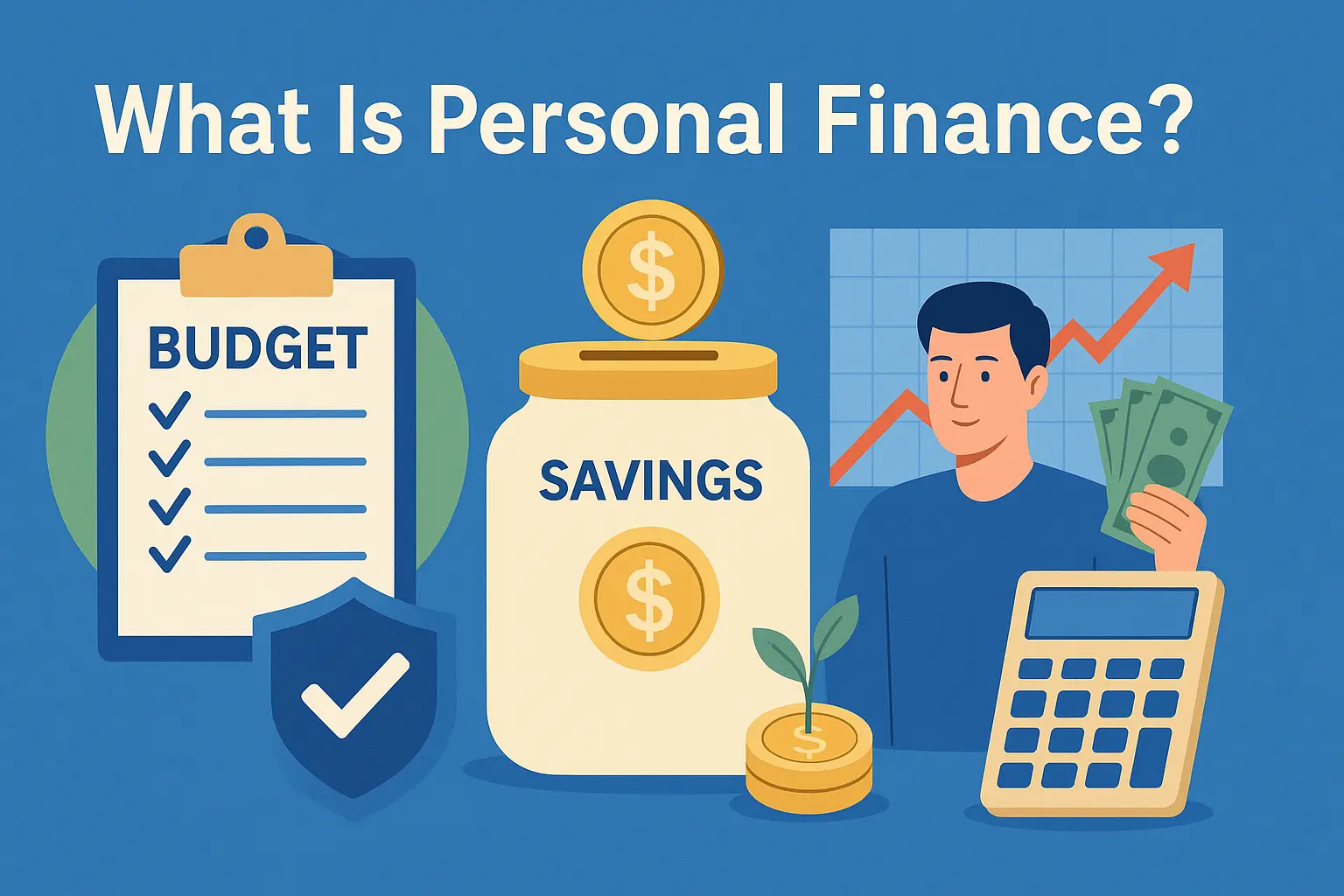
Personal finance is the practice of managing your money — including income, budgeting, saving, investing, insurance, tax planning and debt management — to meet short- and long-term goals. It’s about making the money you have work for you and protecting yourself from financial shocks.
In this guide you will learn a practical framework to manage money, step-by-step action plans, common mistakes to avoid, and a 30-day starter plan that any beginner can implement immediately.
Why Personal Finance Matters
Good money management provides freedom — the ability to handle emergencies, take advantage of opportunities and retire with dignity. Without a plan, even high earners can face debt stress, poor savings and missed opportunities.
The 6 Fundamental Areas of Personal Finance
- Income: sources and stability (salary, freelance, rental, passive income).
- Budgeting: controlling expenses and prioritising savings.
- Emergency fund: liquid money to cover shocks.
- Insurance & protection: health, life and asset insurance.
- Investing: growing money via SIPs, stocks, bonds, PPF and other instruments.
- Tax planning: legal ways to minimise tax and improve net returns.
Practical Steps: A Simple Personal Finance Framework
- Know your take-home income — list all predictable inflows.
- Track expenses for 30 days — use bank statements, card logs and manual notes.
- Create a baseline budget — start with 50-30-20 or zero-based budgeting.
- Build a starter emergency fund — ₹10,000–₹25,000 or one month essentials, then scale to 3–6 months.
- Buy essential insurance — health cover & term life (if dependents exist).
- Start investing regularly with SIPs into index or diversified funds.
- Review and automate — automate savings and revisit quarterly.
Budgeting Essentials (Easy Methods)
Budget methods that work for beginners:
- 50-30-20 rule: 50% needs / 30% wants / 20% savings.
- Zero-based budget: assign every rupee a job.
- Envelope system: category-based limits (digital wallets or bank accounts).
How to Build an Emergency Fund
Start with a small target (₹10k–₹25k) and automate monthly transfers to a liquid account or liquid mutual fund. Increase the buffer to 3 months of expenses within 6–12 months, and 6 months for people with variable income.
Investing Basics for Beginners
Begin with low-cost index funds or a diversified mutual fund via SIP. Keep equities for goals >5 years. Use PPF and fixed deposits for guaranteed, tax-efficient parts of your plan depending on timeframe and risk appetite.
Insurance — What You Really Need
- Term life insurance — one of the most cost-effective ways to protect dependents.
- Health insurance — inpatient coverage and a family floater for unexpected medical bills.
- Avoid confusing ULIPs or endowment plans unless you understand fees and returns.
Tax Planning — Simple Moves That Add Up
Use Section 80C investments (PPF, ELSS, EPF) and 80D for health insurance to reduce taxable income. For salaried individuals, optimise HRA, LTA and standard deductions to legally lower tax outgo.
Common Mistakes to Avoid
- Not tracking expenses and relying on memory.
- Mixing emergency funds and long-term investments.
- Carrying high-interest debt while investing aggressively.
- Buying expensive insurance products marketed as "investment + protection".
30-Day Action Plan (Beginner-Friendly)
- Track all expenses for 30 days.
- Automate a small monthly transfer (₹500–₹2,000) to savings or SIP.
- Cancel one unused subscription and add savings to your transfer.
- Purchase a basic health insurance plan if you don't have one.
- Set one clear goal (emergency fund, travel, gadget) and allocate a bucket for it.