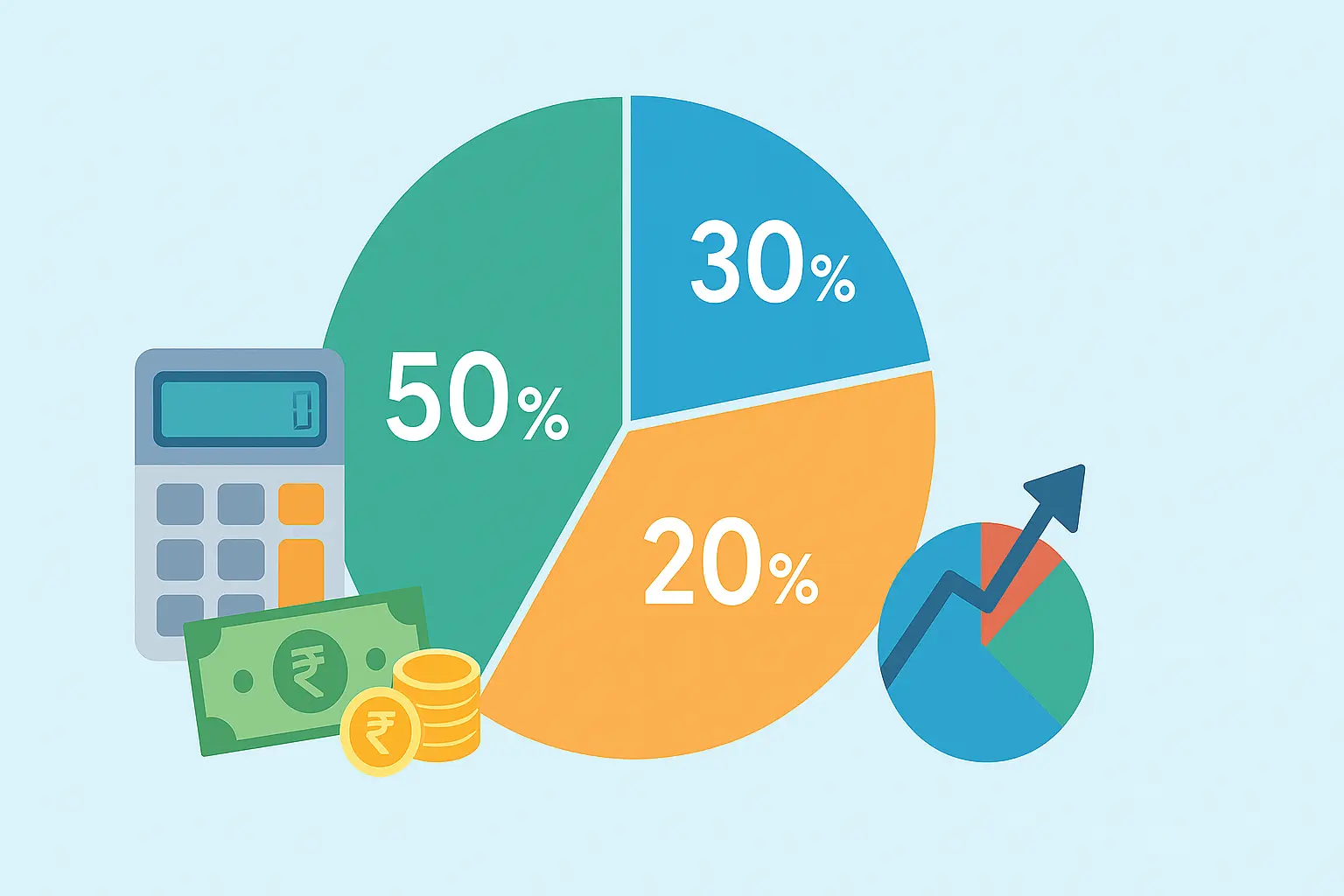
The 50-30-20 rule is a simple budgeting framework that divides your net monthly income into three buckets: 50% for needs, 30% for wants, and 20% for savings & debt repayment. It’s easy to remember and practical for people starting their financial journey. This India-focused guide explains how to apply the rule, adapt it for different incomes and cities, provides real examples and a handy interactive calculator to visualise your monthly allocation.
The rule is a guideline — not a one-size-fits-all law. Use it as a starting point and customise based on housing costs, family responsibilities, or aggressive debt repayment goals.
What Each Bucket Means
Needs — 50%
Needs are essential expenses you must pay to live and work: rent or EMI, groceries, utilities, essential transport, healthcare, minimum loan payments and compulsory insurance premiums.
Wants — 30%
Wants are discretionary: dining out, travel, subscriptions, entertainment, hobbies and non-essential upgrades.
Savings & Debt Repayment — 20%
This bucket includes building an emergency fund, investing through SIPs or lumpsum, retirement savings and extra loan prepayments above minimum EMIs.
Why the 50-30-20 Rule Works
- Simple to follow: No complex categories — easy mental model for everyday decisions.
- Helps automate: You can set fixed transfers for savings and needs and let wants be flexible.
- Psychologically sustainable: Allows room for fun so you don’t feel deprived.
When to Follow It — and When to Modify
Apply the rule as-is if you are building basic financial discipline. Modify if:
- Housing costs in your city exceed 25% of income — reduce wants or increase income.
- You have high-interest debt — allocate more than 20% to accelerate repayment.
- You are saving for a near-term target (house downpayment) — temporarily increase savings to 30–50%.
- Your income is irregular — use a conservative baseline (lowest 3-month average) to avoid shortfalls.
50-30-20 Interactive Calculator
Enter your monthly take-home income below to instantly see suggested allocations. You can also set a custom savings percentage and compare with the 50-30-20 guideline.
50-30-20 Calculator
Real-Life Examples (India)
Example 1 — Young professional, ₹40,000 net
- Needs (50%): ₹20,000 — rent ₹9,000, groceries ₹5,000, transport/utility ₹3,000, insurance/EMI ₹3,000
- Wants (30%): ₹12,000 — dining out, OTT subscriptions, shopping
- Savings (20%): ₹8,000 — emergency fund + SIP
Example 2 — Family in a metro, ₹100,000 net
With higher housing and education costs, family budgets may look like: Needs 60%, Wants 20%, Savings 20% (temporary). Aim to restore savings to 20%+ over time by increasing income or trimming wants.
Variations & When to Break the Rule
Some useful alternatives:
- Aggressive saver: 40-30-30 (more to savings)
- Debt-focused: 50-20-30 (more to debt repayment within savings bucket)
- High-cost city: 60-20-20 temporarily
- Irregular income: use a conservative baseline and keep a larger emergency fund
How to Make the Rule Work — Practical Tips
- Automate savings: standing instruction to transfer to savings/SIP on payday.
- Track weekly: small reviews avoid month-end surprises.
- Cut one subscription per month: quick wins add up.
- Use virtual buckets: separate accounts or app tags for goals.
- Increase savings with raises: route a portion of raises to savings first.
Common Mistakes to Avoid
- Using gross instead of net income for calculations.
- Counting long-term investments as “available” for monthly wants.
- Not accounting for irregular annual expenses (insurance renewals, maintenance).
30-Day Action Plan — Implement the 50-30-20 Rule
- Calculate your net income and set up a savings transfer for 20%.
- List fixed monthly needs and automate bill payments.
- Track variable spends for one month and categorise into wants/needs.
- Cancel one unused subscription and move the money to your savings bucket.