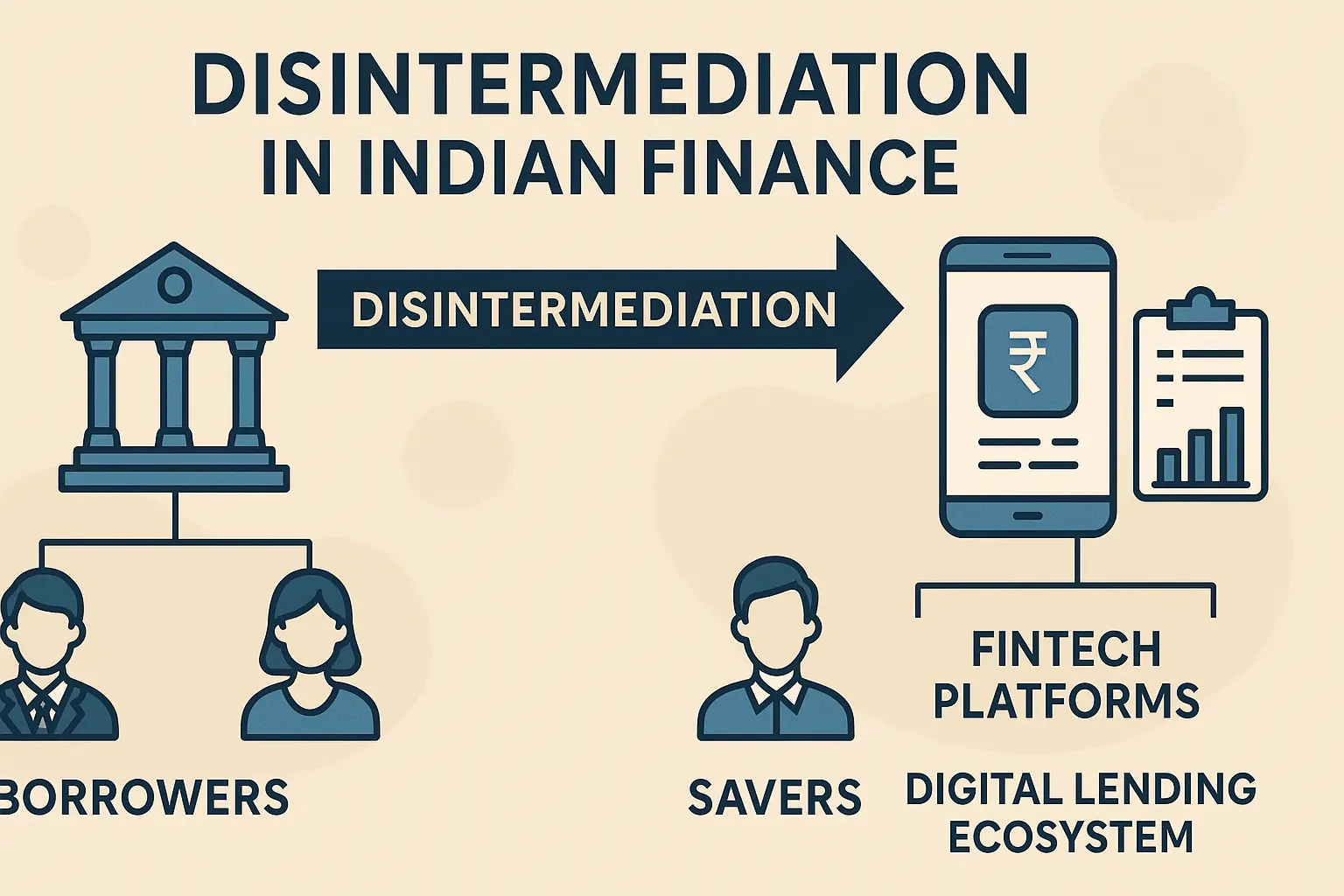
India’s Financial Sector Faces Major Disruption: Disintermediation Accelerates as Fintechs Reshape Credit & Payments
18 Nov 2025
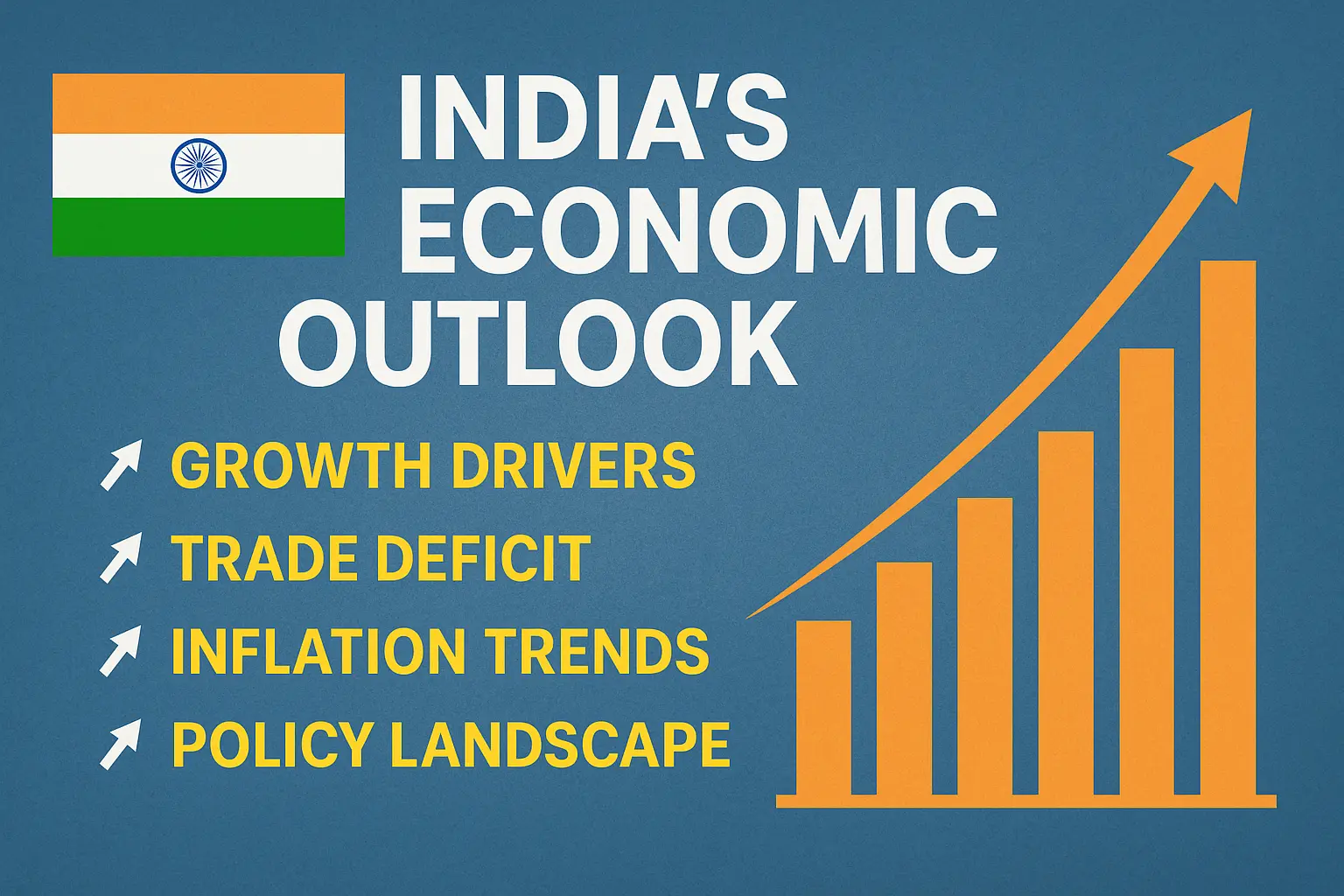
India remains one of the world’s fastest-growing major economies, but rising trade deficits, global uncertainty and inflation pressures demand careful policy balancing.
Published on 18 November, 2025
India enters FY26 as the world’s fastest-growing major economy, with GDP expected to expand between 6.6% and 6.9% depending on global conditions. While advanced economies continue to battle slowing growth and geopolitical pressures, India’s domestic fundamentals remain far stronger, supported by steady consumer spending, robust investment flows, government-led infrastructure push, and consistent manufacturing expansion.
Despite these positives, India’s macro landscape is becoming increasingly complex. Global uncertainty, slower export demand, a widening trade deficit, sticky core inflation, and volatile global commodity prices could challenge policymakers. This article offers a detailed, 1200-word examination of India’s macroeconomic outlook for FY26—covering growth momentum, risks, trade dynamics, inflation outlook, FPI trends and policy expectations.
India’s economy is powered by its domestic engine. Private consumption accounts for nearly 60% of GDP, and rising incomes, urban demand, lower digital costs, and greater financial inclusion have kept domestic spending resilient. The services sector—IT, financial services, travel-tourism, and retail—continues to be a significant growth pillar.
The government’s multi-year infrastructure capex drive is another major catalyst. Highways, railways, green energy, and logistics projects are expanding at record pace. Public investment is crowding-in private capex, particularly in manufacturing, renewables, data centers, electronics, EV ecosystem and construction materials.
India’s manufacturing push is also benefiting from global supply chain realignments. The Production-Linked Incentive (PLI) schemes are attracting global firms in electronics, semiconductors packaging, pharmaceuticals, drones, automobiles and textiles. As supply chains diversify away from China, India’s role as a manufacturing hub continues to rise.
While domestic demand is robust, external trade remains a serious challenge. India’s merchandise trade deficit has widened sharply due to high imports of crude oil, electronics, gold, and capital goods. Meanwhile, exports have been weighed down by weak global demand, geopolitical disruptions, and price instability in major commodity markets.
The services sector, especially IT and business outsourcing, continues to generate large surpluses, but it is no longer enough to fully offset the goods deficit. A sustained high trade gap risks putting pressure on India’s current account balance and may impact the stability of the rupee.
However, several positive structural changes are emerging:
Headline inflation has moderated compared to the highs of the last few years, but remains above the RBI's ideal comfort zone. Food inflation, especially vegetables, cereals, and pulses, continues to be volatile due to climate fluctuations.
Meanwhile, core inflation has softened due to stable demand and slower price increases in services. However, global oil markets remain the key risk. Any spike in crude prices could push inflation higher and force the RBI to maintain tighter monetary conditions.
Experts expect inflation to average between 4.5% and 5% in FY26—still manageable, but requiring vigilant monitoring.
The Reserve Bank of India faces a complex policy environment. Growth is strong, but inflation remains sticky; the rupee is stable, but the trade deficit is rising; credit demand is high, but liquidity is tightening. In such a scenario, the RBI is likely to follow a cautious approach.
Key RBI themes for FY26 include:
Rate cuts, if any, will only be considered once inflation stabilizes well within the target band.
The government continues to follow a disciplined fiscal consolidation path, targeting a lower fiscal deficit while sustaining high capital expenditure. Strong GST collections, improved compliance, and rising corporate profits contribute to robust tax revenues.
Even as welfare spending continues, the focus remains on improving productivity through quality infrastructure, digital public goods, and manufacturing incentives.
Industries like EVs, electronics assembly, chemicals, defence, drones, and capital goods stand to benefit from global and domestic capex cycles.
Credit growth remains strong, NPAs are at multi-year lows, and capital buffers are healthy. Digital-first finance continues to add millions of new consumers to formal credit.
Massive investments in solar, green hydrogen, battery storage, and wind energy are strengthening energy security and export potential.
India’s IT and GCC (Global Capability Center) expansion remains robust, supported by AI, cloud, cybersecurity, and automation demand.
India continues to attract global investors due to its stable macro fundamentals and long-term growth potential. FPIs have increased allocations to Indian equities and debt even as global markets remain volatile.
Domestic institutional investors (mutual funds, insurers, pension funds) also provide strong market support, reducing dependency on foreign capital.
Despite India’s strong fundamentals, several risks must be monitored closely:
India’s economic trajectory remains strong and resilient. The country has moved into a phase where domestic growth engines are powerful enough to offset moderate global shocks. With stable governance, rapid digitalization, infrastructure expansion, and rising private capex, India is well-positioned to remain a global growth leader for the next decade.
While challenges like the trade deficit, inflation volatility, and global uncertainty persist, India’s medium-term outlook remains among the world’s brightest.
This article is for educational purposes only and does not constitute investment advice. The company data and analysis mentioned are based on publicly available information and corporate announcements. Always verify current market conditions from official sources before investing. Past performance is not indicative of future results.