
SEBI Proposes Major IPO Norm Overhaul: Easier Lock-in Compliance & Abridged Prospectus for Retail Investors
17 Nov 2025
The market regulator is set to tighten transparency and professional standards with mandatory asset disclosures for top officials and a restructured certification regime for intermediaries.
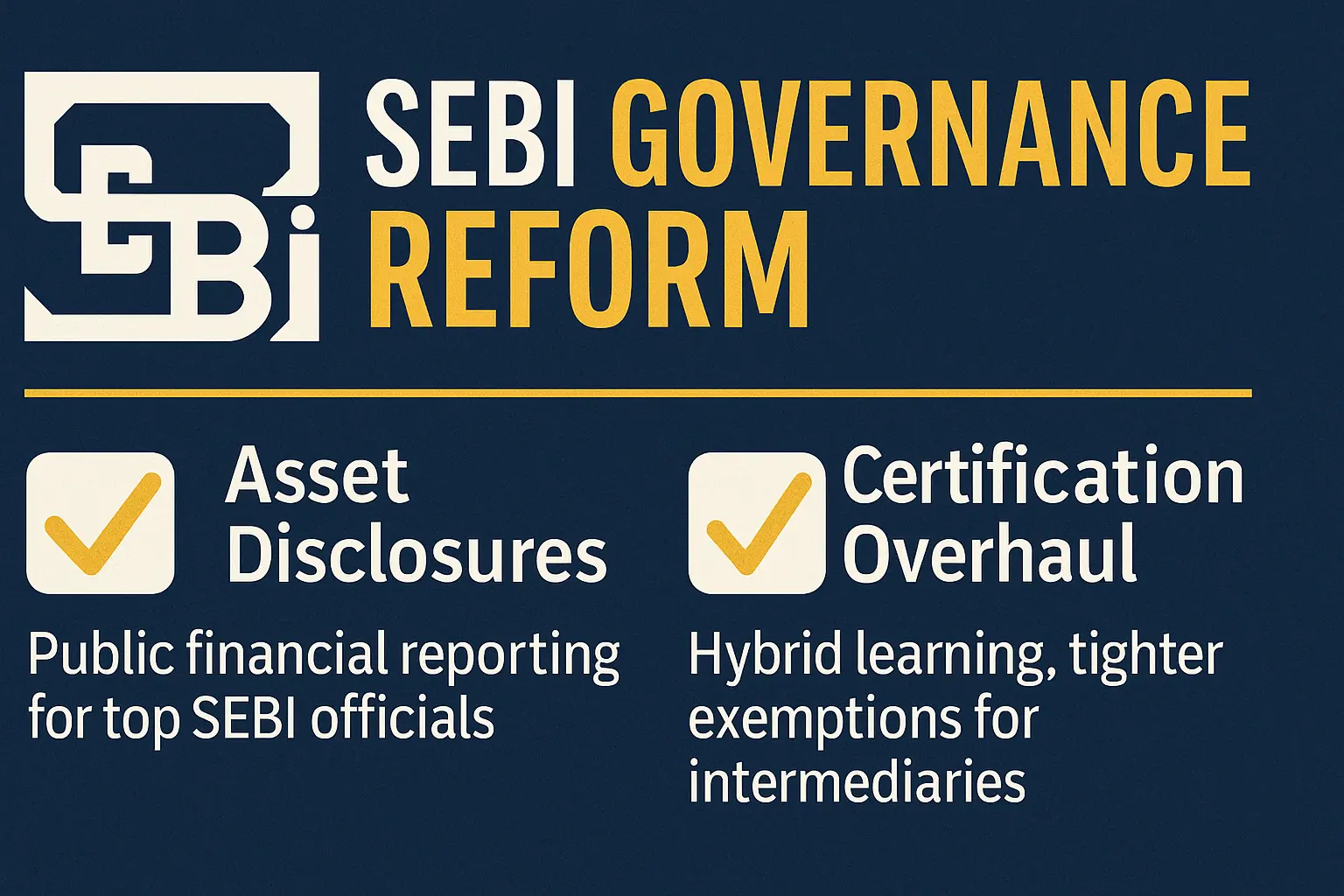
The Securities and Exchange Board of India (SEBI) has proposed two key reforms that could significantly reshape regulatory culture and financial professionalism in Indian markets: mandatory asset disclosures for top SEBI officials and a complete restructuring of certification norms for market intermediaries.
Both recommendations were published by a high-level panel appointed by SEBI, and aim to introduce greater transparency within the regulator and ensure higher competency among market participants.
Circular Date: November 15, 2025
Issued By: Securities and Exchange Board of India (SEBI)
Reference Links:
👉 ET: SEBI panel proposes public asset disclosure
👉 TOI: SEBI proposes certification reform
SEBI’s move to require **public disclosure of financial assets** by top officials — including Chairperson and Whole-Time Members — is a significant governance shift. This mirrors international practice in countries like the US (SEC) and UK (FCA), and aims to reduce potential conflicts of interest and build public trust.
With the increasing complexity of India’s capital markets, the regulator has proposed new norms for certification and practice of intermediaries such as RIAs, brokers, and mutual fund distributors.
The proposed framework includes **hybrid learning**, dynamic exams, and tighter exemptions, ensuring professionals stay updated on regulatory, technological, and financial shifts.
Currently, no such requirement exists for SEBI officials, making this a landmark suggestion that could bring greater regulatory accountability.
Here’s how SEBI’s proposed model compares globally:
| Regulator | Asset Disclosure | Certification Norms |
|---|---|---|
| SEBI (India) | 🔄 Proposed | 🔄 Proposed (Hybrid Learning) |
| US SEC | ✔ Public Disclosure | ✔ Registered Compliance Exams |
| UK FCA | ✔ Audited Public Records | ✔ Updated Certification Standards |
The reforms also signal India’s ambition to align more closely with global financial standards and attract more institutional and FPI funds.
SEBI’s proposals mark a pivotal moment for regulatory transparency and professionalization. With enhanced asset disclosure norms and a modernized certification regime, India’s capital markets are poised to become more robust, accountable, and globally aligned.
Intermediaries should proactively prepare for compliance changes, and investors can look forward to a more transparent marketplace that's driven by integrity and competency.
Source references: Economic Times, Times of India, SEBI internal memo.


This article is for educational purposes only and does not constitute investment advice. The company data and analysis mentioned are based on publicly available information and corporate announcements. Always verify current market conditions from official sources before investing. Past performance is not indicative of future results.