
SEBI Crackdown on Finfluencers: New Rules to Curb Unregistered Stock Tips, Revenue Sharing Models Under Scanner
21 Mar 2026
Stricter monitoring, higher penalties and governance checks signal a new era of compliance discipline in Indian markets
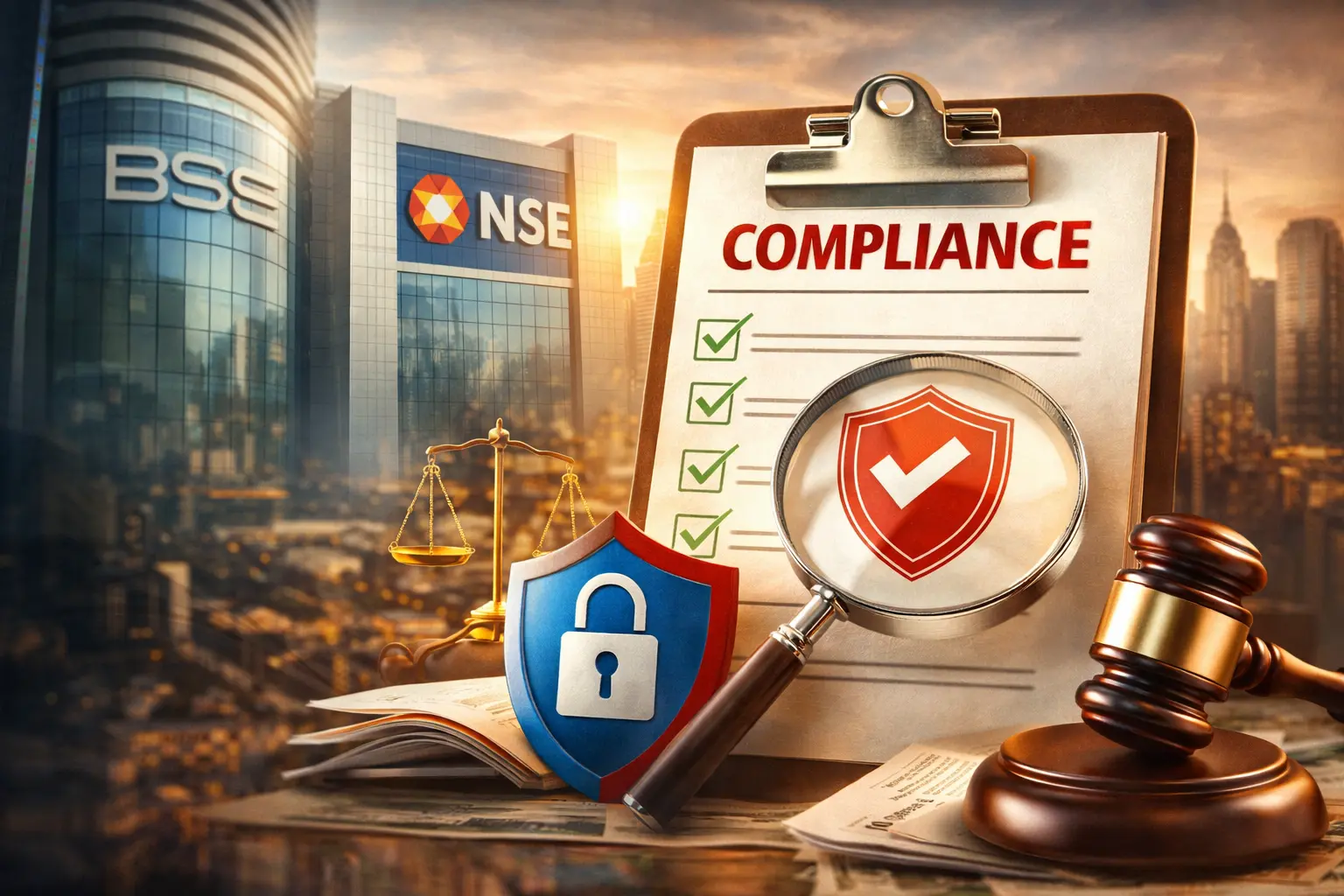
India’s leading stock exchanges — National Stock Exchange (NSE) and Bombay Stock Exchange (BSE) — are significantly tightening compliance enforcement for listed companies, reflecting a broader regulatory push toward transparency and corporate governance.
Backed by the Securities and Exchange Board of India (SEBI), exchanges are now taking stricter action against companies that fail to meet disclosure norms, governance standards and listing obligations.
This shift marks a critical transition from reactive monitoring to proactive enforcement in Indian capital markets.
In recent years, retail participation in stock markets has surged, making investor protection a key regulatory priority.
To maintain market integrity, exchanges are focusing on:
Any lapse in these areas can directly impact investor confidence and market stability.
One of the most common violations is the failure to disclose material events on time.
Such delays can lead to unfair advantages and are strictly penalized.
Exchanges are increasingly scrutinizing governance practices, including:
Poor governance is often seen as a red flag for long-term investors.
The Listing Obligations and Disclosure Requirements (LODR) form the backbone of compliance for listed entities.
Violations may include:
Stock exchanges actively monitor trading patterns to detect anomalies.
Companies may be asked for clarifications or face restrictions.
Exchanges are no longer hesitant to impose penalties, even for relatively minor violations.
These actions are intended to deter repeated violations and enforce discipline.
The tightening compliance environment is forcing companies to upgrade their internal processes.
Companies that fail to adapt risk financial penalties and reputational damage.
Compliance trends can offer valuable insights for investors.
Investors should regularly track exchange disclosures and announcements.
While stricter enforcement may create short-term discomfort for companies, it is beneficial for the overall market ecosystem.
This aligns India with global best practices in market regulation.
Major global exchanges such as NYSE and NASDAQ follow strict compliance frameworks, and India is moving in a similar direction.
This is particularly important as India attracts increasing foreign institutional investment.
The growing enforcement actions by NSE and BSE highlight a clear message — compliance is no longer optional.
Companies must prioritize transparency and governance, while investors should use compliance history as a key parameter in stock selection.
As enforcement continues to strengthen, Indian markets are expected to become more robust, transparent and investor-friendly.
Based on recent exchange actions and regulatory trends | For informational purposes only

This article is for educational purposes only and does not constitute investment advice. The company data and analysis mentioned are based on publicly available information and corporate announcements. Always verify current market conditions from official sources before investing. Past performance is not indicative of future results.